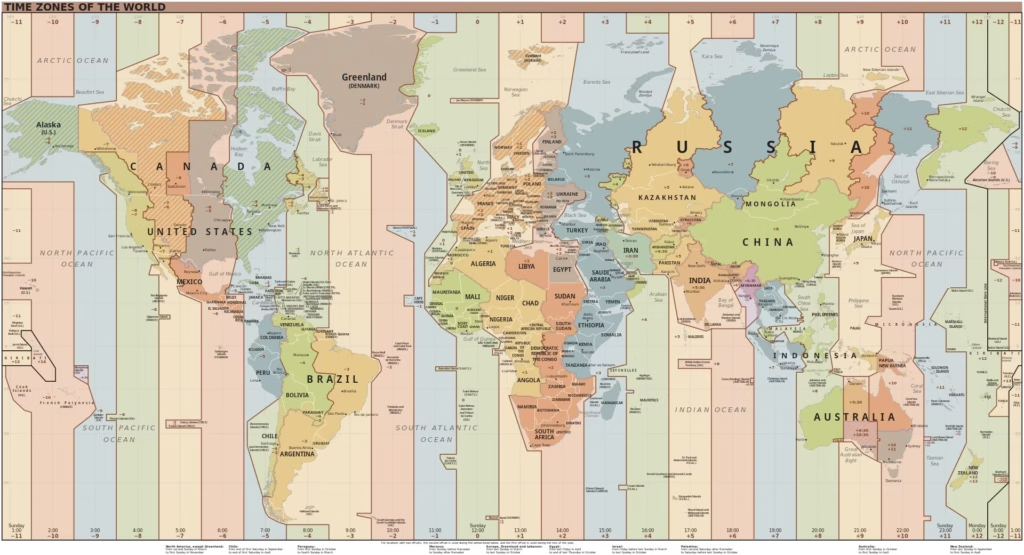
It was the best of times, it was the worst of times, it was the age of smart watches, it was the age of homages (in this case, to Charles Dickens), it was the season of lume, it was the season of blackout, it was time to stop talking about time and focus on cities. Up to 24 cities (or airport codes), that is, that appear on the chapter ring of analog world timer (aka worldtimer) watches and are displayed individually on digital dual-time watches. These cities represent time zones relative to Coordinated Universal Time (UTC) and range from -11 to +13.
World Timer Movements
World Timers often pair cities of the world with a movement that displays multiple times (e.g. a caller’s GMT or a dual-time digital. The Glashütte Original Senator Cosmopolite’s Calibre 89-02 uses standard and DST windows that display corresponding airport codes for 35 time zones, including those offset in 30, 45 and 60 minute intervals in relation to UTC.
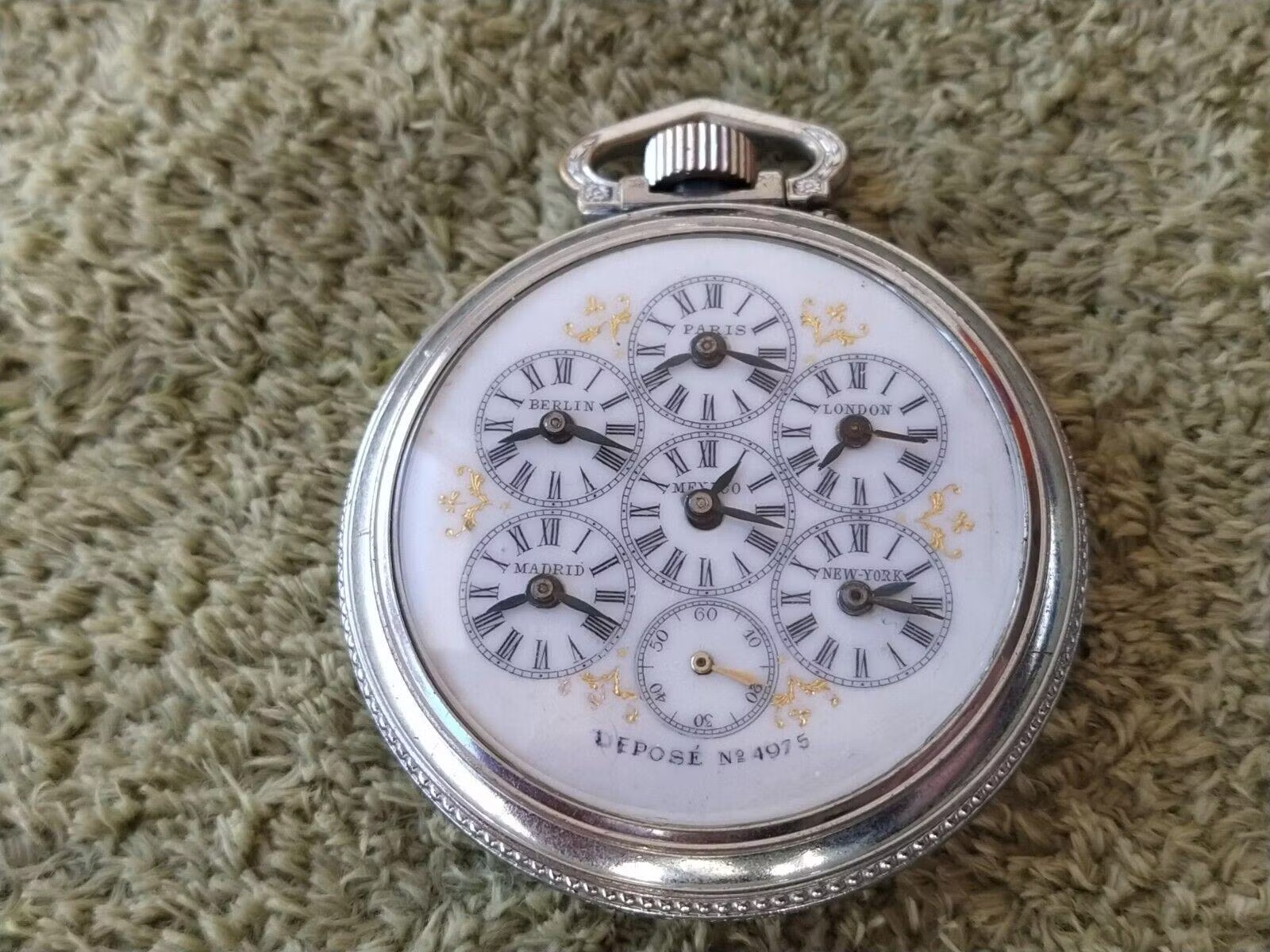
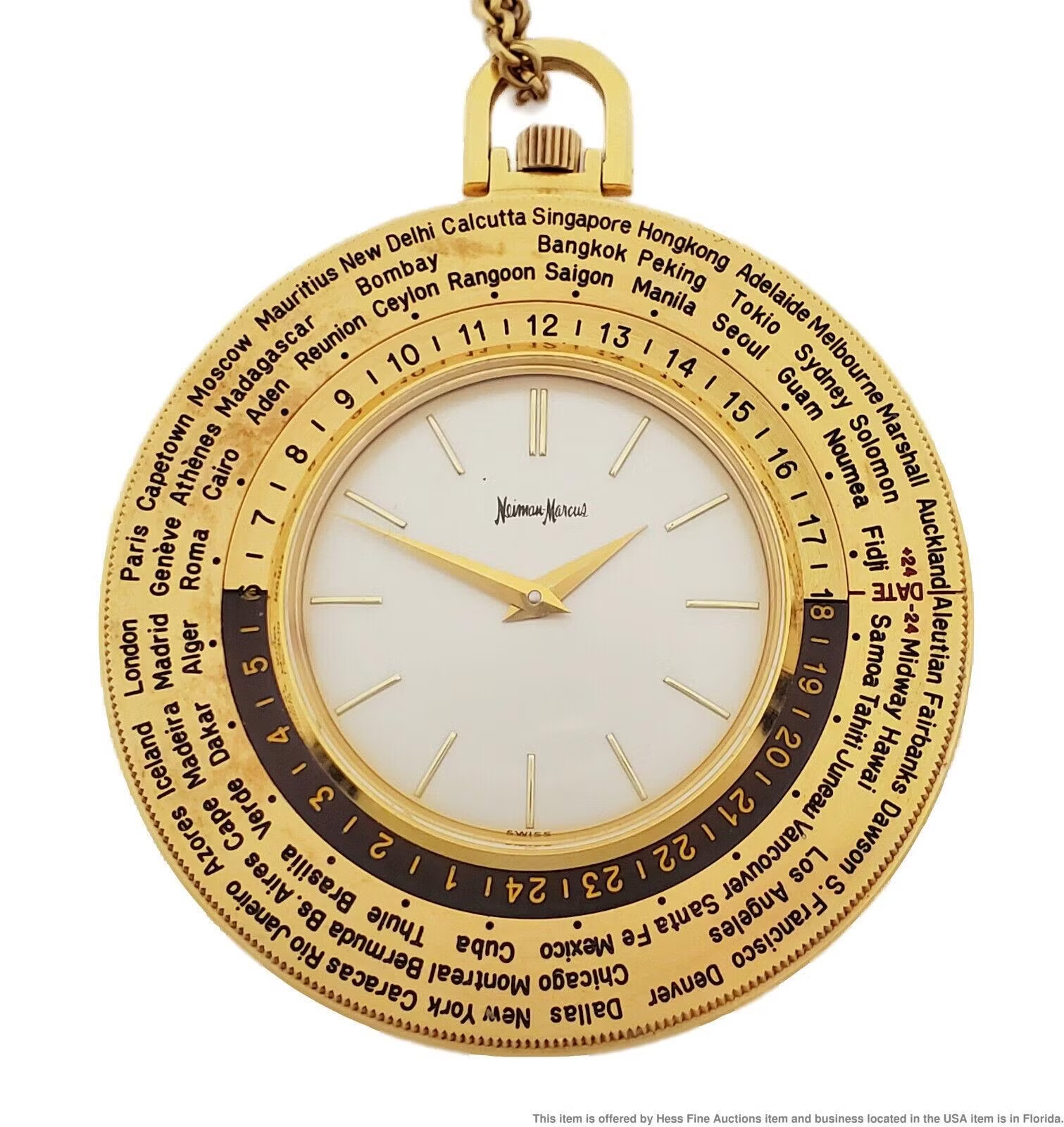
This unique mechanical pocket watch displays 6 time zones (and this).
Or, it might contain a moving caller’s GMT, like the one highlighted in Marc’s recent video on the Orient Sightseer.
Which cities make the dial?
While movements are interesting, with World Timer watches it’s all about the cities. But which cities? ChatGPT explains that common cities found on world timer watches are “often chosen because they represent key geographic regions and major financial centers across different time zones,” including:
- New York
- London
- Tokyo
- Paris
- Sydney
- Los Angeles
- Moscow
- Hong Kong
- Dubai
- Beijing
It’s interesting to note that Hong Kong and Beijing share the same time zone, forcing world timer watch designers to choose. Some designers choose cities to represent the brand, replacing common cities with the brand’s home city or other cities based on geopolitical considerations. Some designers omit some time zones. It’s also important to note that world time zones have changed over, well, time. Variety is the spice of World Timer life in some time zones. Let’s look at the choice of cities for various world timer watches that highlight deviations from the commonly chosen cities in each time zone, excluding the time zones with few variations (UTC -9, UTC.
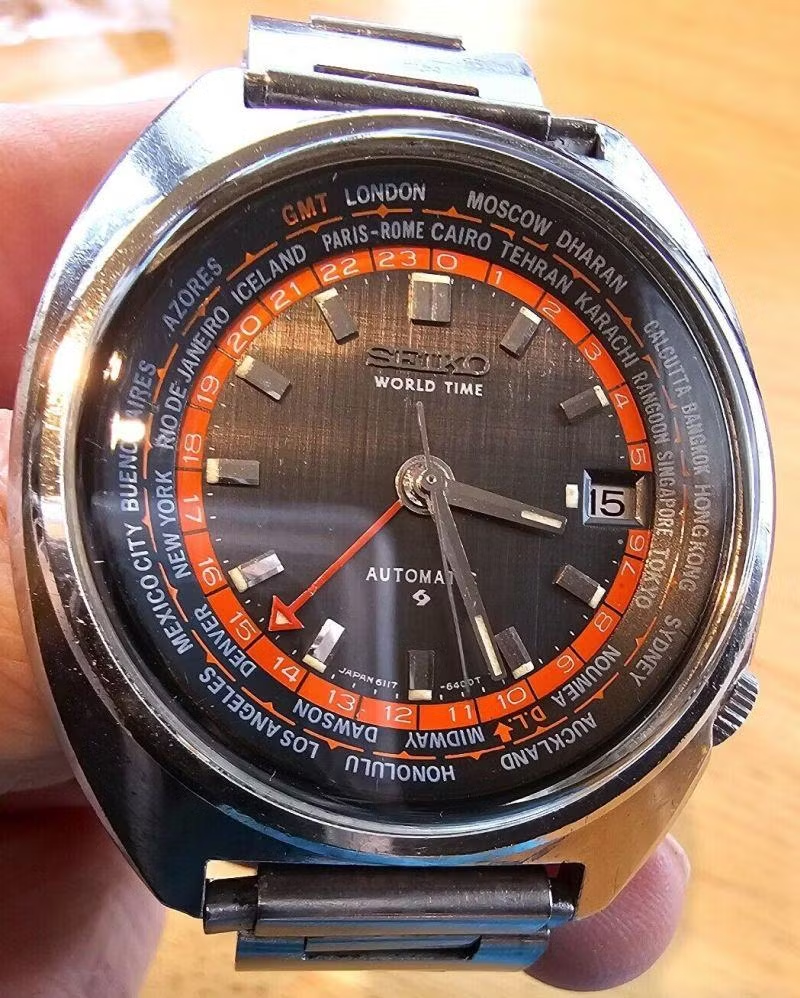
Anchorage (UTC -9 and -10) and Honolulu (UTC -10 and -11)
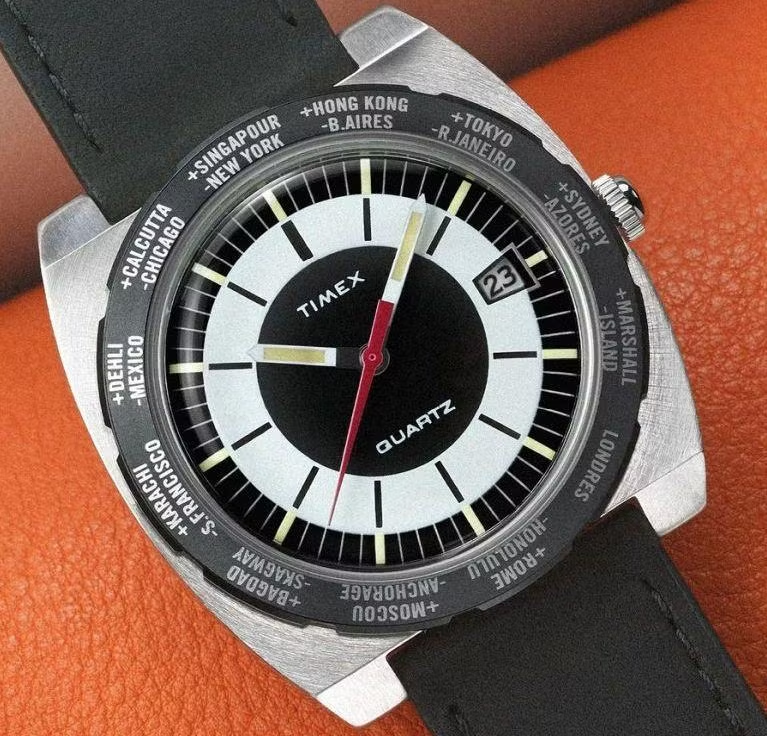
Alaska’s massive size has supported up to 4 times zones over time. UTC – 11 is almost, but not quite, exclusively Midway, for example on the Timex World Time Reissue which has Honolulu.
UTC – 10 is mostly Honolulu and UTC – 9 is mostly Anchorage. The Seiko 6117-6400 (both pre and post 1972), as well as others, use Dawson for UTC – 9. Gambier, Marquises and Juneau also make appearance in UTC – 9. At certain points, the time zones for Hawaii and parts of Alaska were the same. For more details on Alaska time zone history, check out the Alaska Historical Society’s excellent article, “Keeping Time in Alaska.”
Los Angeles (UTC – 8)
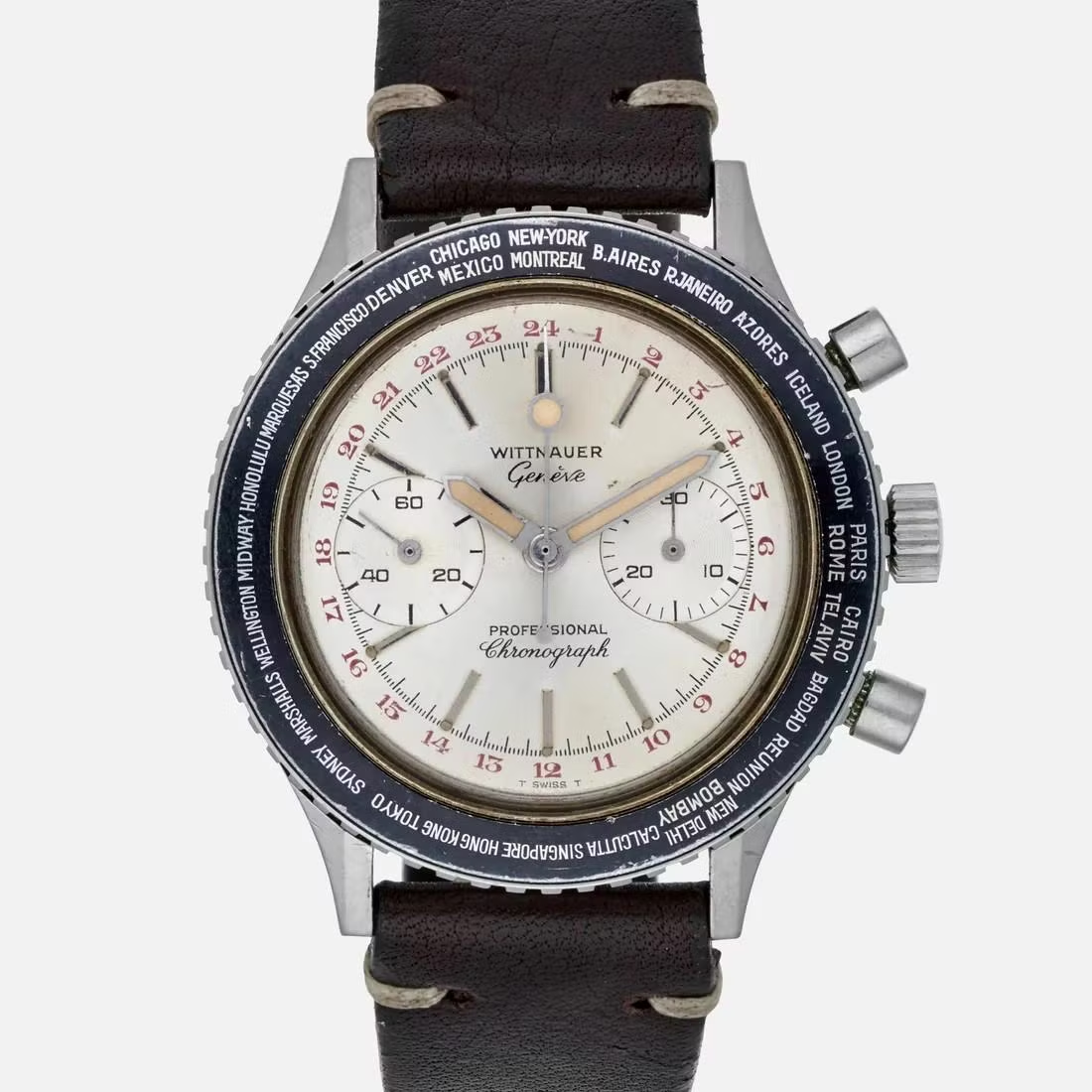
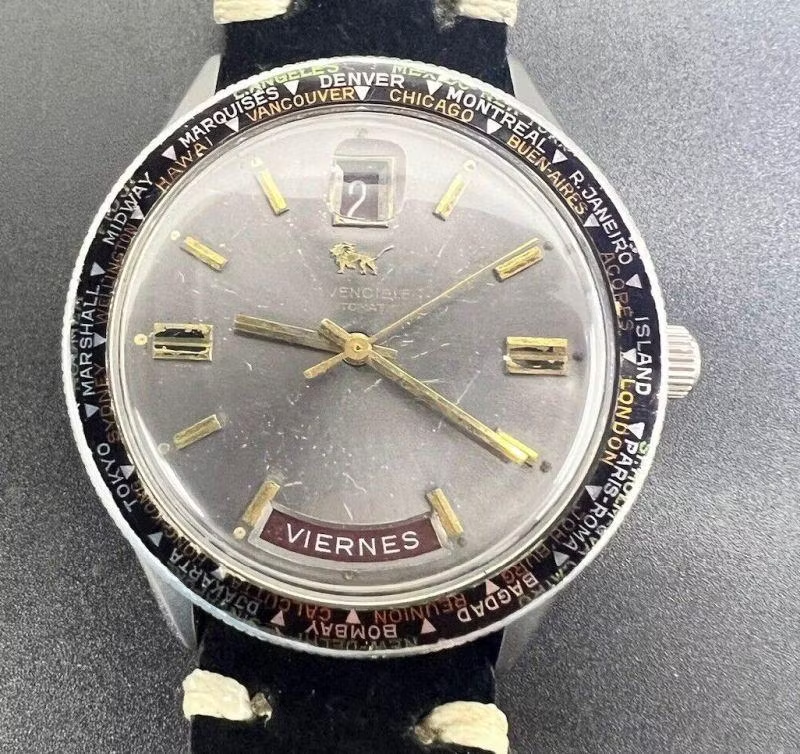
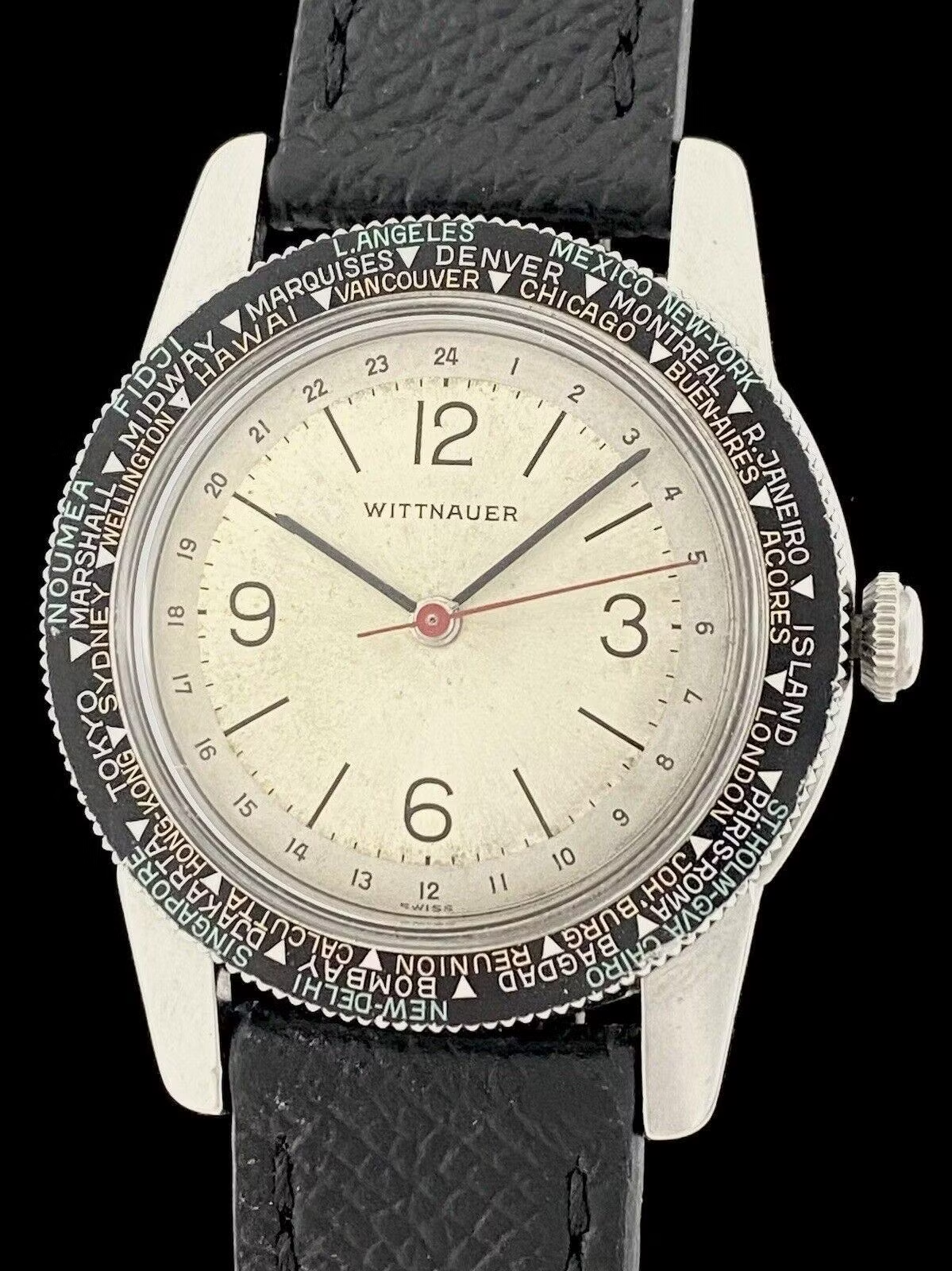
The Wittnauer 7004B World Time Chronograph (a rare combination) and others replace the otherwise standard Los Angeles with San Francisco. Two French language world timers, Invencible and Wittnauer WT Rotating Bezel include Vancouver with Los Angeles. Both Momentum and Halios are based in Vancouver and have GMT watches but haven’t produced a world timer yet, but might possibly do so with their home city in UTC – 8 position. One can hope…
Chicago (UTC – 6)
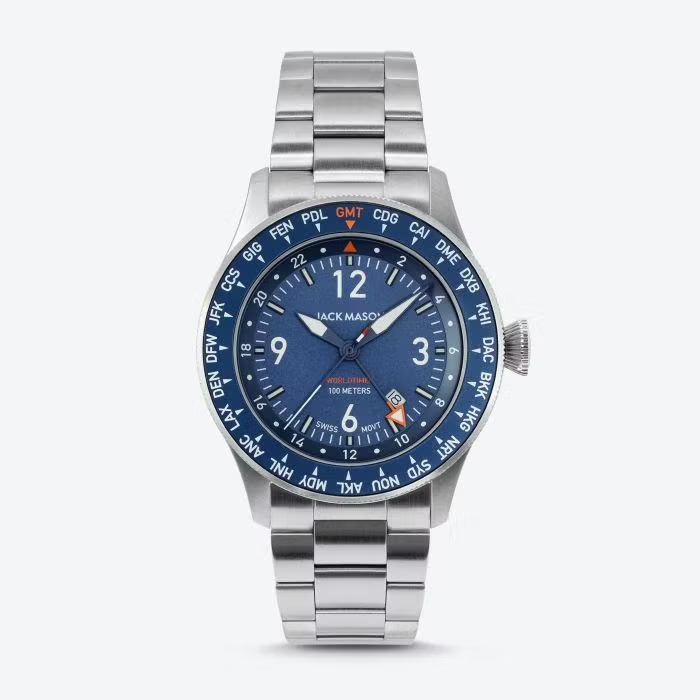
Although Chicago dominates the UTC – 6 time zone, Mexico City has a strong showing. And Dallas-based Jack Mason introduces some variety with the Dallas – Fort Worth (DFW) airport code on its great quartz caller Pursuit World Timer.
New York (UTC – 5)
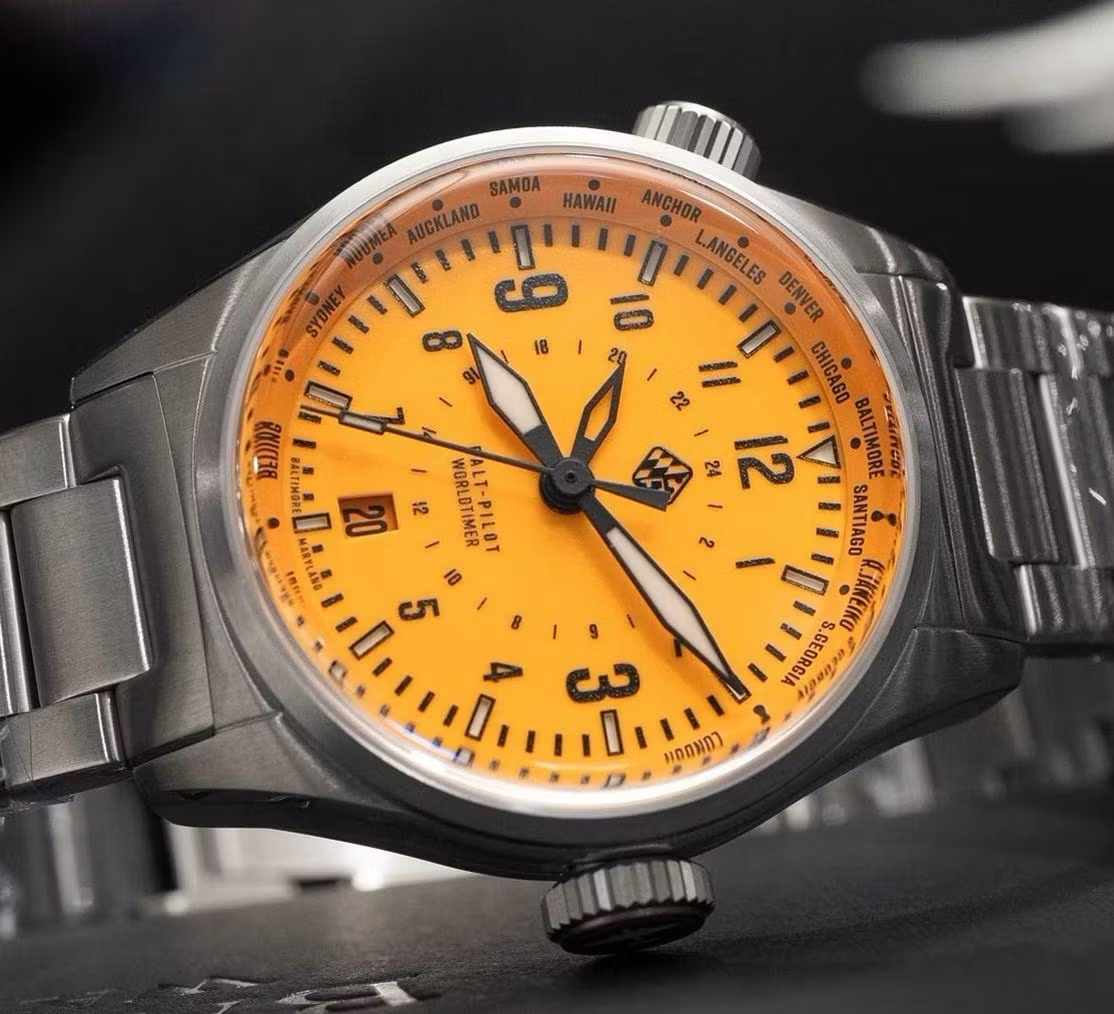
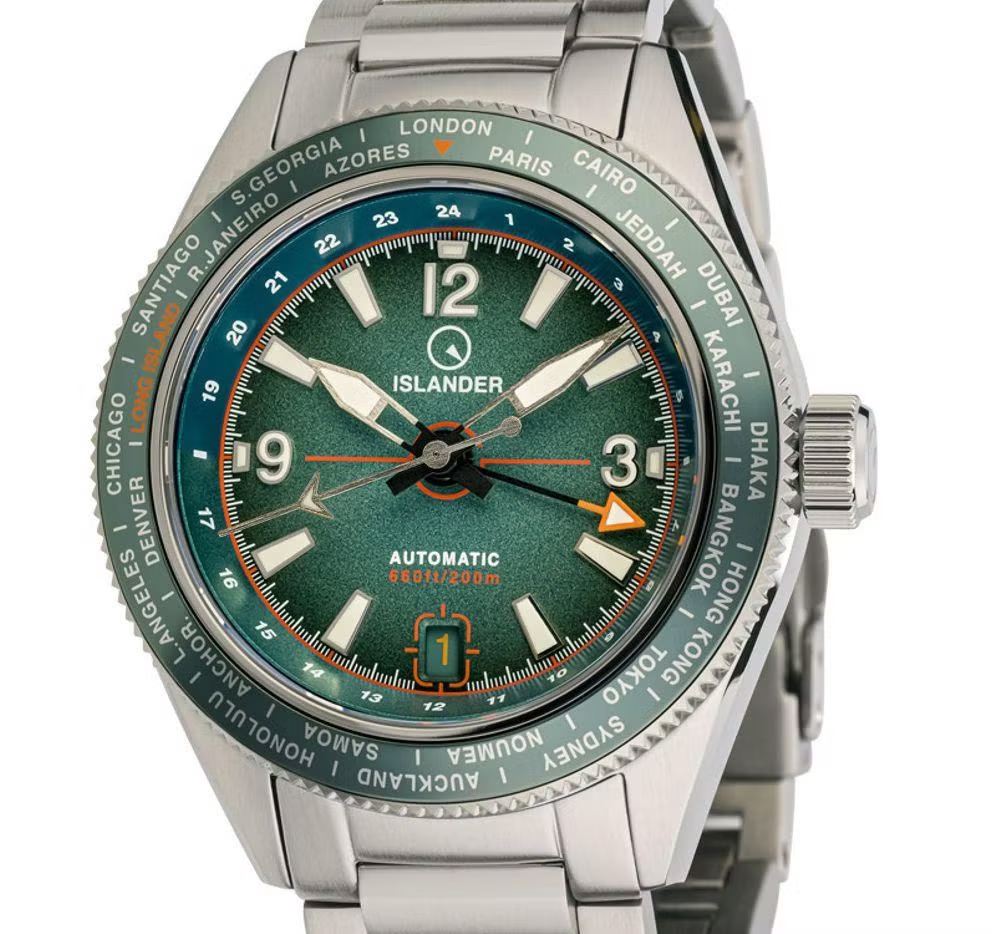
Few brands dare to replace New York City in UTC – 5. However, rebellious American designers with ties to Baltimore (Tsao Baltimore on the Balt-Pilot Worldtimer) and Long Island (Islander on the Calabro ) chose their home cities instead.
Pick one… (UTC – 4)
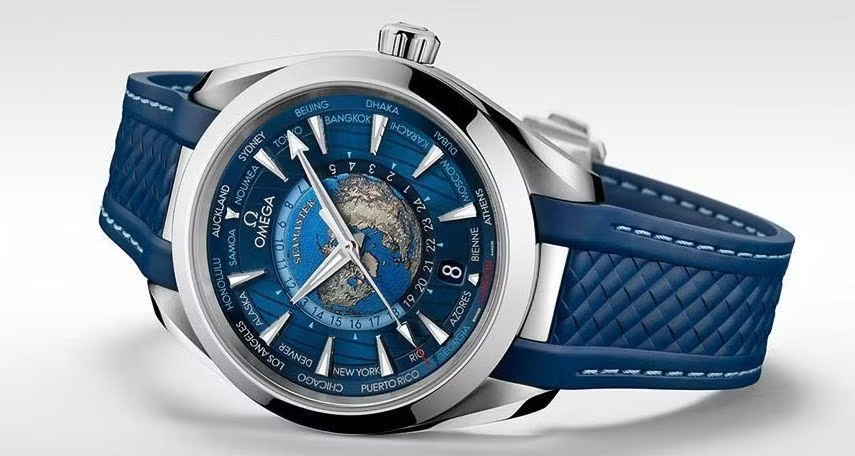
Among the sample set for this post, UTC – 4 includes 7 different cities: Buenos Aires -> Santiago, Caracas (CCS), St. Bartholomew, La Paz, Puerto Rico (on the Omega Aqua Terra World Timer), and Santo Domingo. If nothing is standard, is everything is standard?
Rio de Janeiro (UTC -3), S Georgia (UTC – 2) and Azores (UTC – 1)
In the 1970s, Philippe Patek pursued purchasing power of Argentina, choosing Buenos Aires over the otherwise dominant Rio de Janeiro on the 5231G. In 2024, copycat homage maker Merkur also chose the Argentine capital for UTC -3.
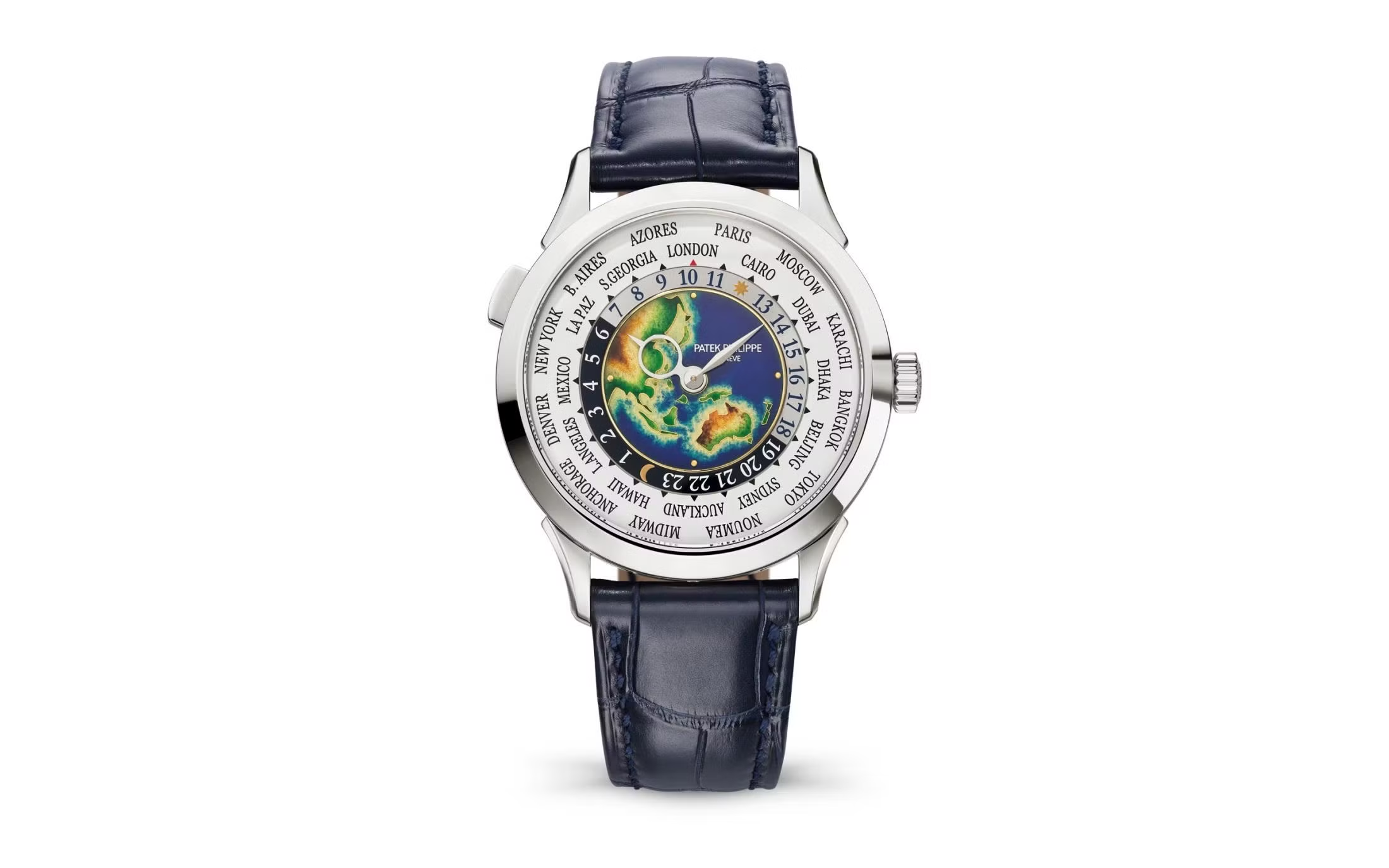
Most designers choose Azores or the UK’s S Georgia in the southern Atlantic for UTC -2, but post-1971 versions of the Seiko 6117-4007 use Cape Verde Islands, a specific island in the Azores. Jack Mason’s Pursuit displays FEN, the airport on the island of Fernando de Noronha, Brazil, east of the mainland.
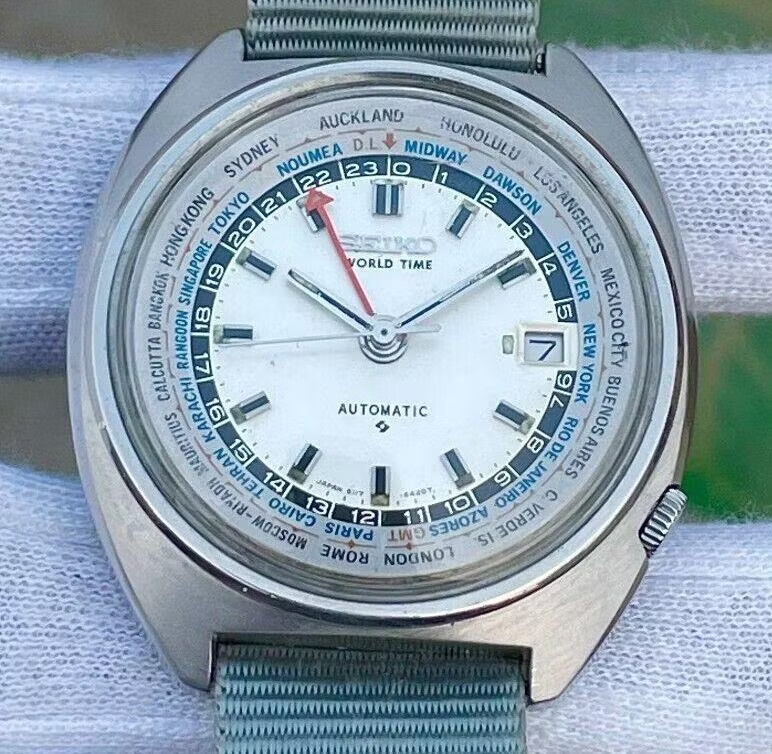
UTC – 1 features Azores and Iceland, but the Hamilton Count-Down Chrono-Matic features the Canaries and Jack Mason’s Pursuit includes PDL, the Ponta Delgada airport on the island of São Miguel, in the Portuguese archipelago of the Azores.
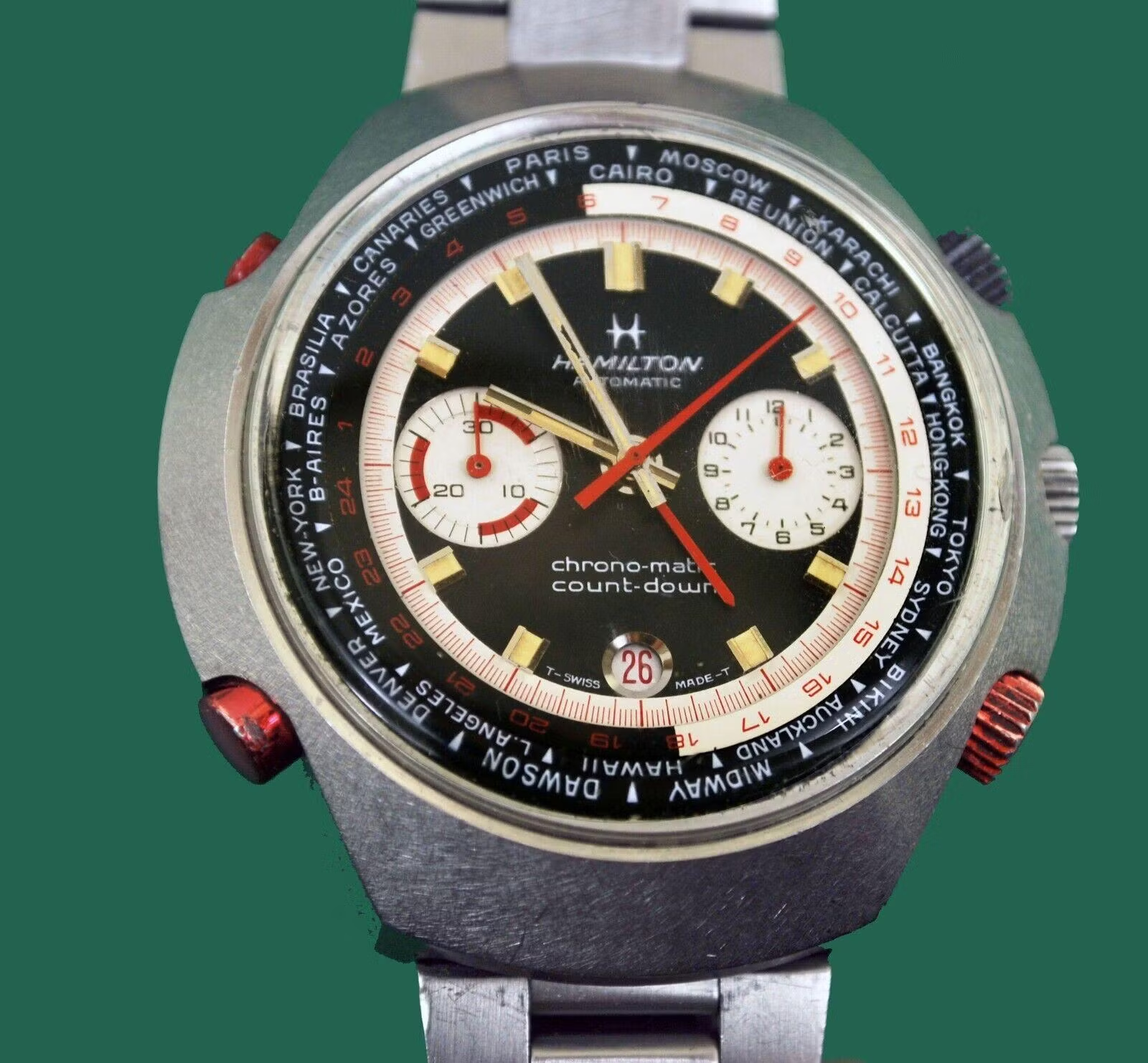
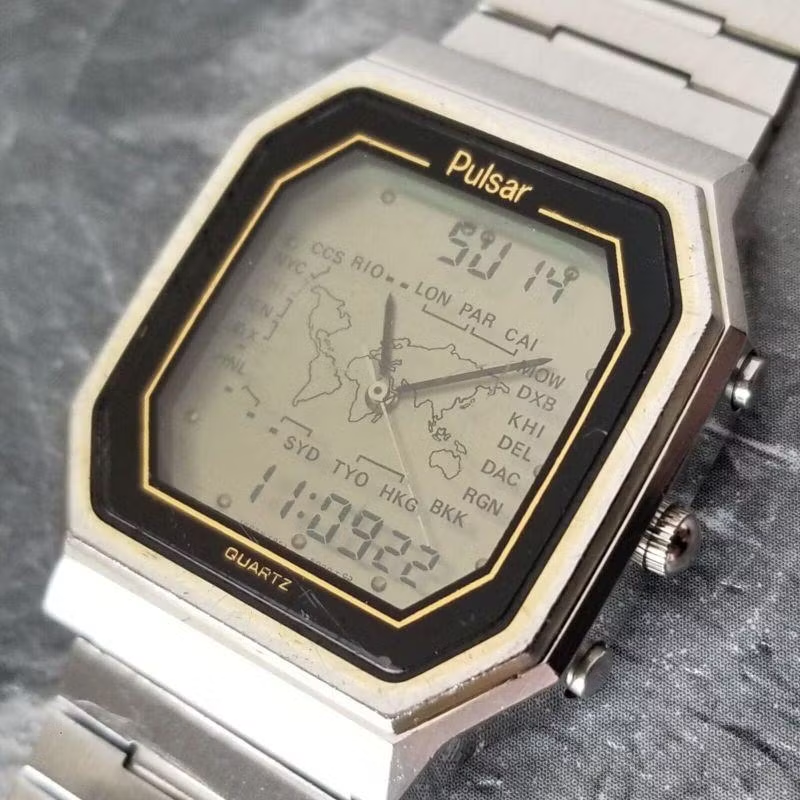
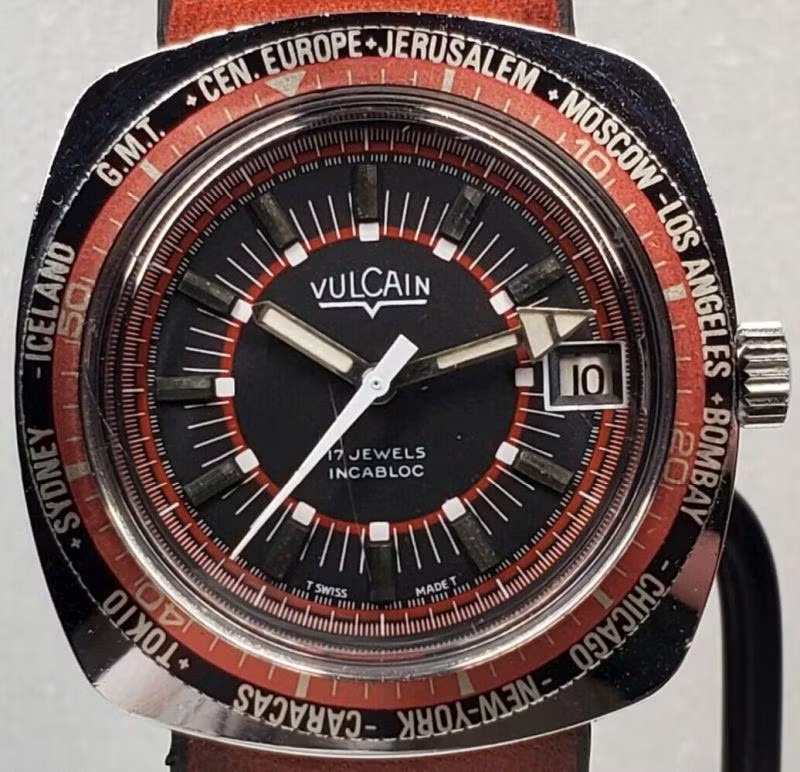
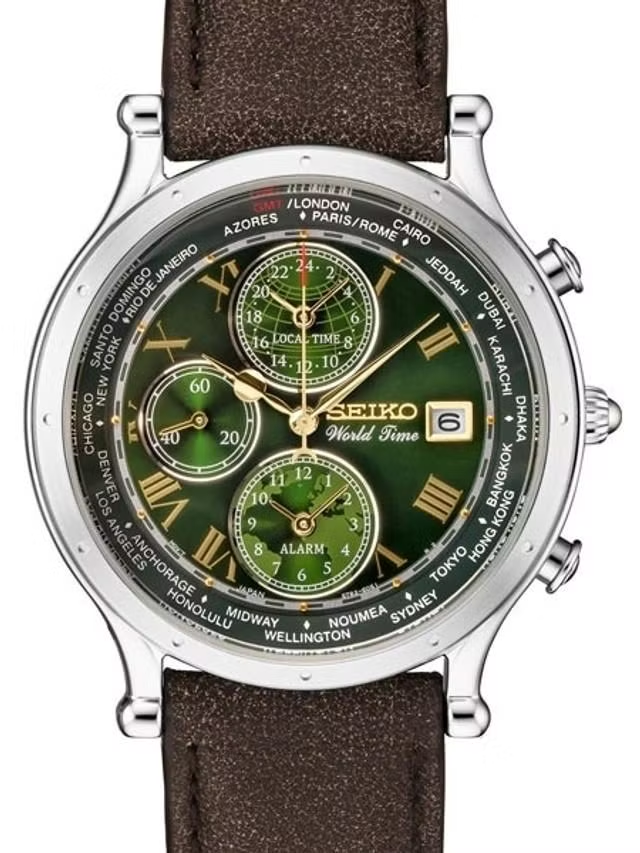
Some models (Pulsar Dual-Time Digital, Vulcain World Time, and Seiko SPL057, ignore one or more of these mostly uninhabited time zones.
Paris and, for a few years, London (UTC + 1)
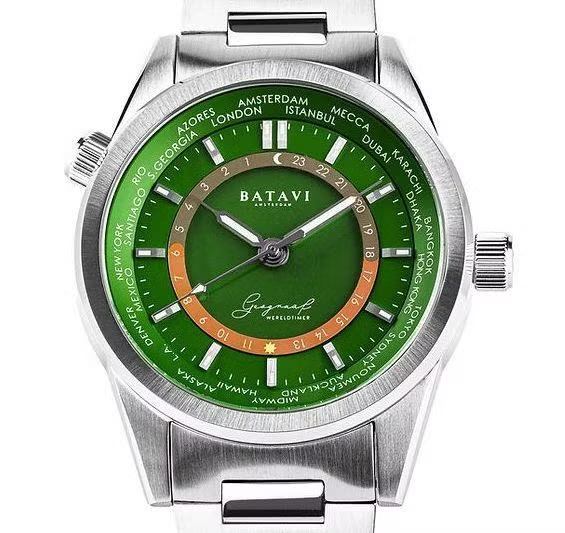
As with New York City, Paris is also rarely replaced. But there are also at least a few rebels in the form of Dutch brand Batavi (Amsterdam on the Geograaf), Timex (Rome on the WT Reissue) and Raketa (Geneva on the neo-vintage Goroda aka “Cities”).

Cairo, “Cario” (for a few batches), and Others (UTC + 2)
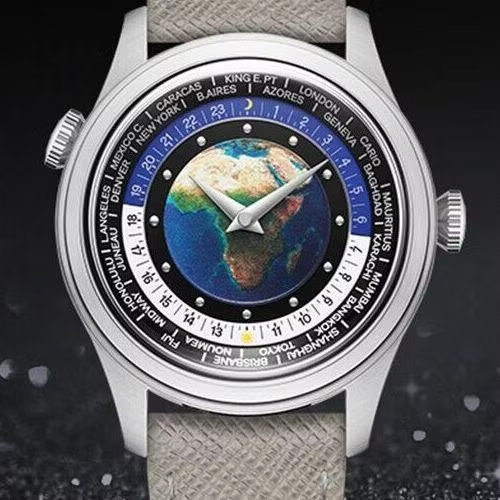
Cairo (incorrectly spelled “Cario” the Merkur World Time Retro Pilot) leads Athens, Johannesburg, and, for a short-time, Moscow, in UTC +2.
Moscow (UTC + 3)
Of course, the Raketa Goroda (“Cities”) any many other world timers have Moscow in the UTC + 3 position. But Islander and Seiko use Jeddah, Saudi Arabia, instead. Batavi, which offer several models with Arabic numerals, has Mecca. The Merkur WT Retro Pilot, Invencible and Timex WT Reissue feature Baghdad, and the Tsao Baltimore Balt-Pilot features Riyadh.
Dubai (pick one, part deux) (UTC + 4)
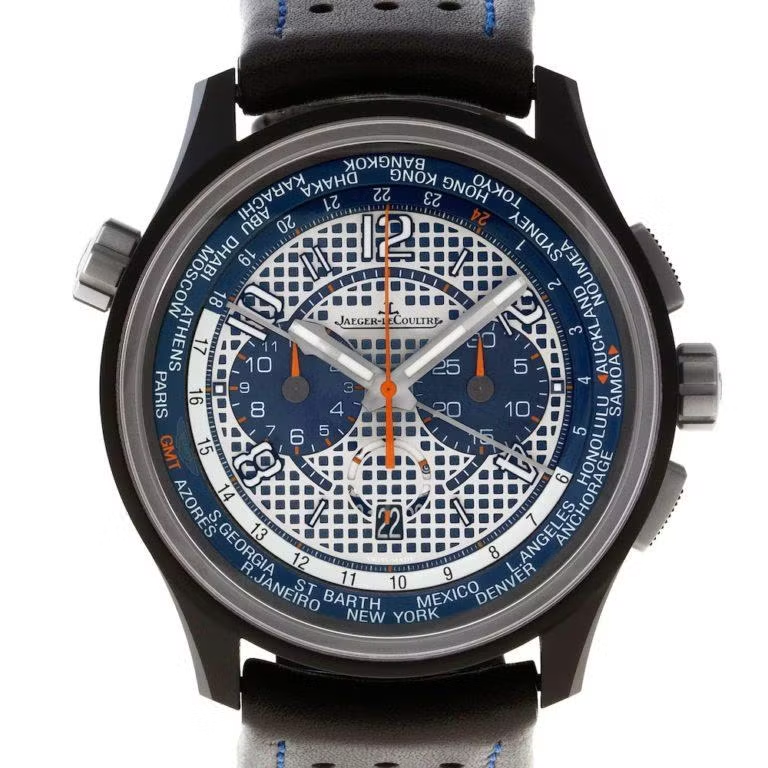
UTC + 4 tops UTC -4 with 8 cities including: Abu Dhabi (JLC Amvox 5 WT 193.J.22), Dharan (Seiko 6117-6400 1968-1971), Dubai (Islander Calabro and Tsao Baltimore Balt-Pilot WT), Karachi, Bahrain, Teheran, Reunion (Invencible), Mauritius, Sverdlovsk.
Karachi, Delhi / Bombay / (UTC + 5), Calcutta / Dhaka (UTC + 6) and Bangkok (UTC + 7)
There isn’t much variation in the UTC +5, +6 and +7 cities. Karachi, Delhi and Bombay dominate +5. Calcutta and Dhaka own UTC + 6, and Bangkok is pretty much on every UTC + 7. But the vintage Wittnauer World Time Rotating Bezel shows Singapore and Djakarta for UTC + 7. The Timex World Time Reissue also shows Singapore, and Invencible also shows Djakarta.
Hong Kong, Beijing (UTC + 8)
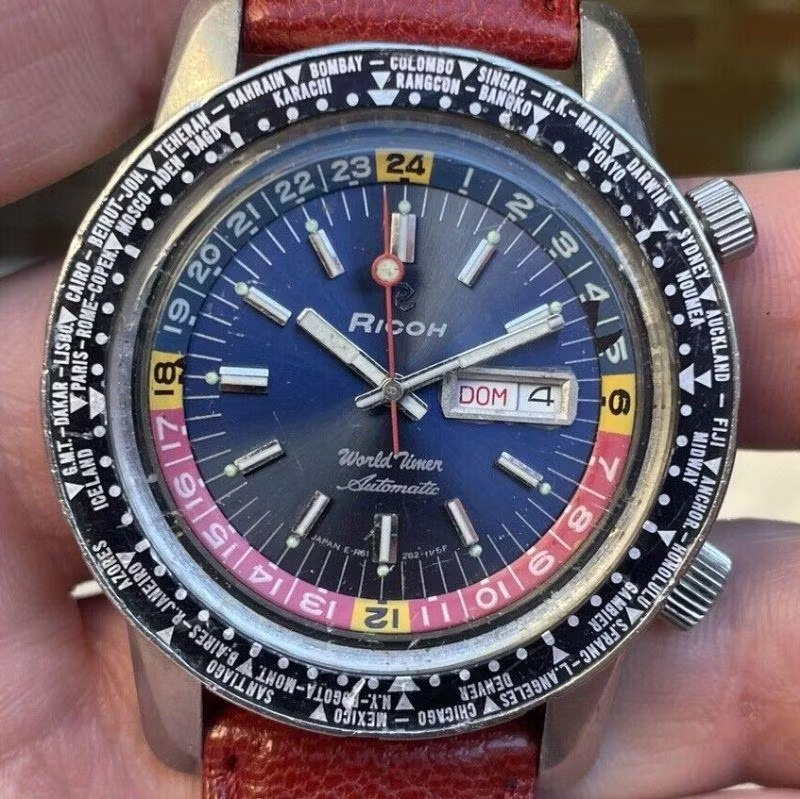
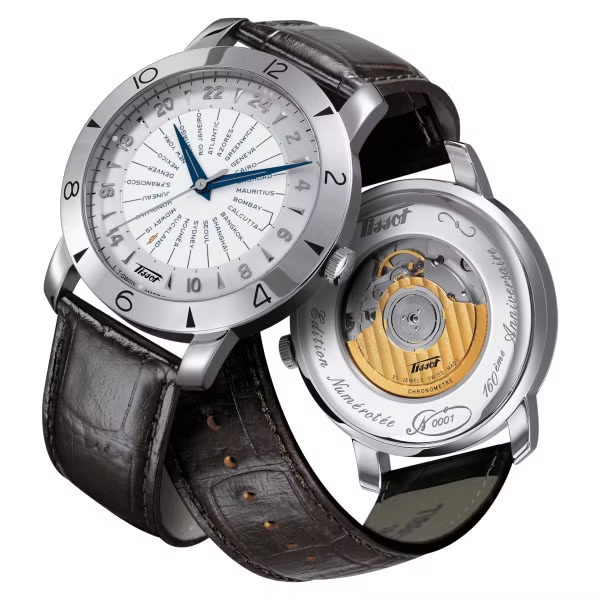
The Ricoh 61215A bucks the Hong Kong, Beijing trend using Singapore and Manila, along with Hong Kong. Shanghai is featured on the Tissot Heritage Navigator and Merkur Dual Crown World Time Enamel.
Tokyo (UTC + 9), Sydney (UTC + 10), Noumea (UTC + 11) & Auckland (UTC + 12)
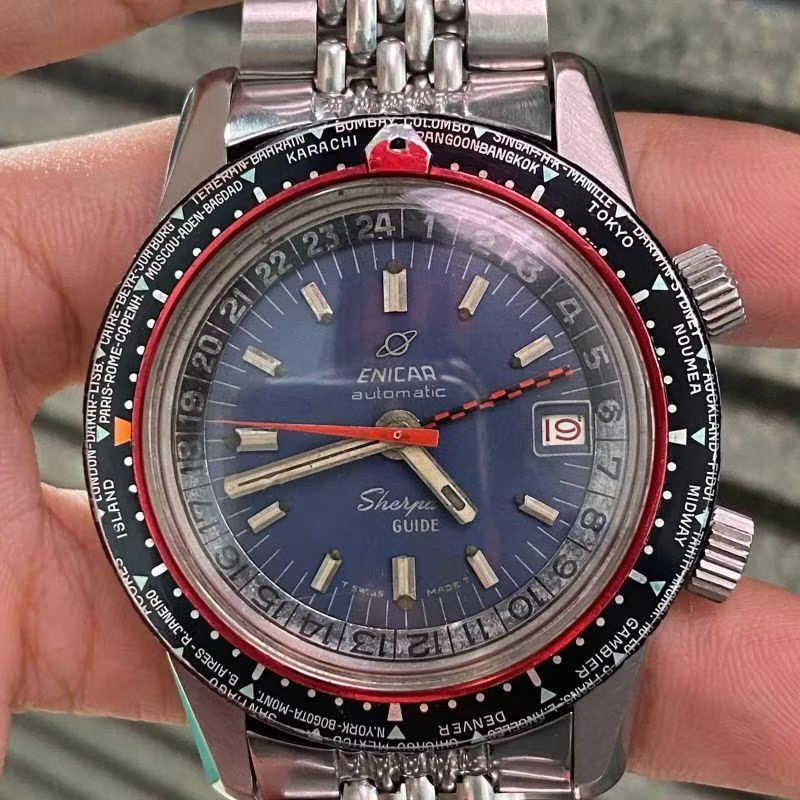
UTC + 9 through +12 are dominated by big cities (Toykyo +9; Sydney +10) and one-of-a-few cities (Noumea +11; Auckland +12), but there are some variations. In UTC + 9k, only Russia-based Raketa replaced Tokyo with Vladivostok (no relation to the famous Russian watch brand Vostok). In UTC + 10, Raketa, Merkur and the infamous Enicar Sherpa Guide replaced Sydney with Magadan, Brisbane and Darwin – Sydney, respectively.
While most world timers feature Noumea and Auckland, the vintage Pulsar Y951-5009 and Vulcain World Timer skip UTC +11 and +12 altogether. The Invencible and Timex World Time Reissue use Marshall (Islands) for UTC + 11, and Seiko SPL057 and Invencible use Wellington for UTC + 12. The Ricoh 61215A
Samoa (UTC + 13)
Samoa’s WST is the only time zone in UTC + 13 and is included on JLC, Islander, Omega and Tsao Baltimore. The Neiman Marcus World pocket watch shows Samoa in the -11 location (i.e. to the negative side of the date line).
Comparison of cities on world timer watches
Here is the full comparison of cities on the world timer watches in this post:
Did Someone Say Dials?
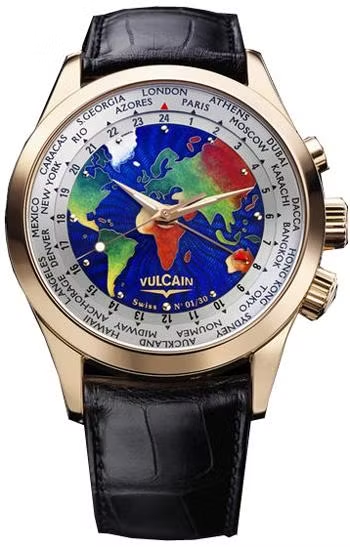
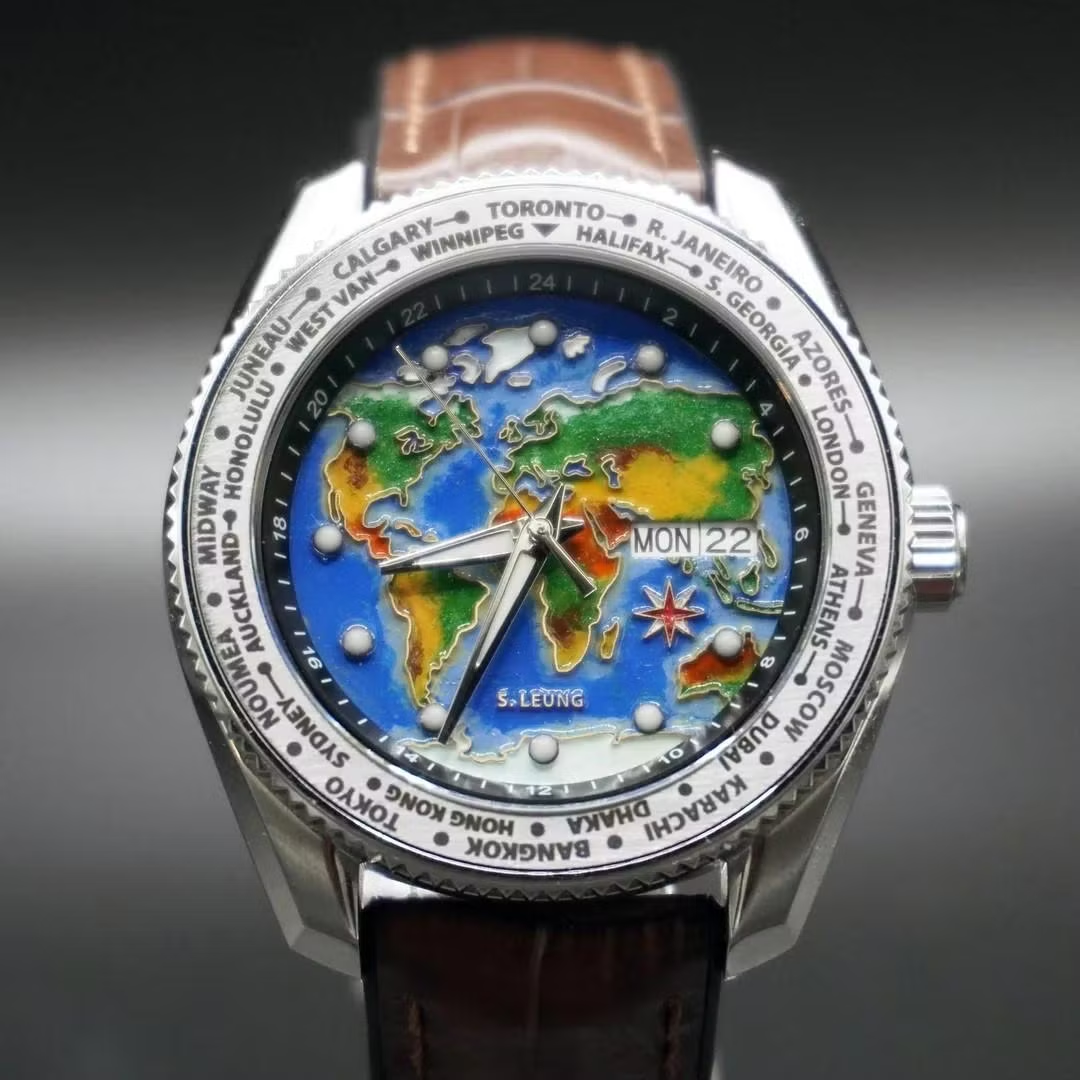
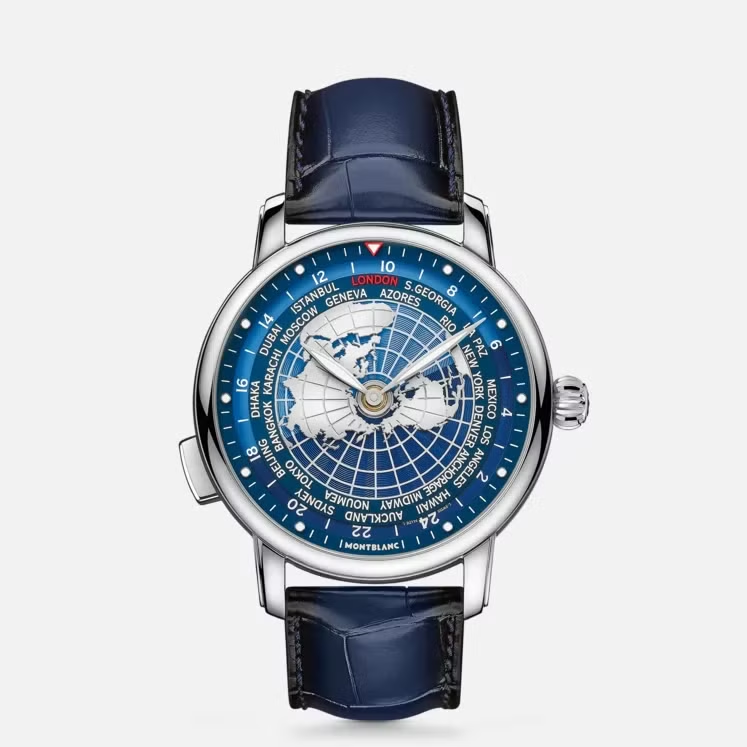
We talked about movements and cities, but can’t forget that the dial is an important element of world timer watch style. We’ve already seen some awesome dial artwork in the Patek Philippe 5231G and Omega Aqua Terra World Timer. Let’s wrap up with a little more world timer dial art, namely the Vulcain Cloisonne: The World, a Canada Cloisonne clone by S. Leung, and the Montblanc Star Legacy Orbis Terrarum.
What’s Missing?
Thank you for finishing this lengthy post! As we clearly share a common obsession, I’d love to know what’s missing – other great world time variations, movements, dials and city combinations…?
Note: originally published here.